Short Sad Stories
Play Short Sad Stories
Short Sad Stories Screenshots



Short Sad Stories review
Exploring the emotional design, choices, and player experience of Short Sad Stories
Short Sad Stories is an interactive narrative game that centers on quiet, emotional scenes and player-driven decisions that deepen understanding rather than ‘fix’ outcomes. In this article I walk you through what makes Short Sad Stories uniquely affecting, share personal impressions from playing it, and give practical tips for getting the most from its chapters. If you want a thoughtful, empathic playthrough with guidance on choices, pacing, and interpreting the story beats, this guide will help you experience the game more fully.
What Short Sad Stories Is and Why It Matters
It’s a game that asks you not to save the world, but to sit with someone as their world quietly falls apart. If you’re coming to Short Sad Stories from more traditional titles, the first thing to understand is that you’ve entered a different kind of space 🫂. This isn’t about points, power-ups, or a grand finale. It’s a story-driven indie game built from the ground up to be a vessel for melancholy, reflection, and the small, haunting moments that define a life.
At its heart, Short Sad Stories is a collection of narrative vignettes. Think of them as interactive short stories or playable poems. You might step into the shoes of someone cleaning out a late parent’s attic, a person waiting at a train station after a difficult goodbye, or a character sifting through the digital ghost of an old relationship 💾. The “gameplay” is in the feeling, not the winning. This is its core identity and what makes it matter—it treats emotional resonance not as a side effect, but as the primary objective of its emotional game design.
What to expect from the game’s structure and pacing
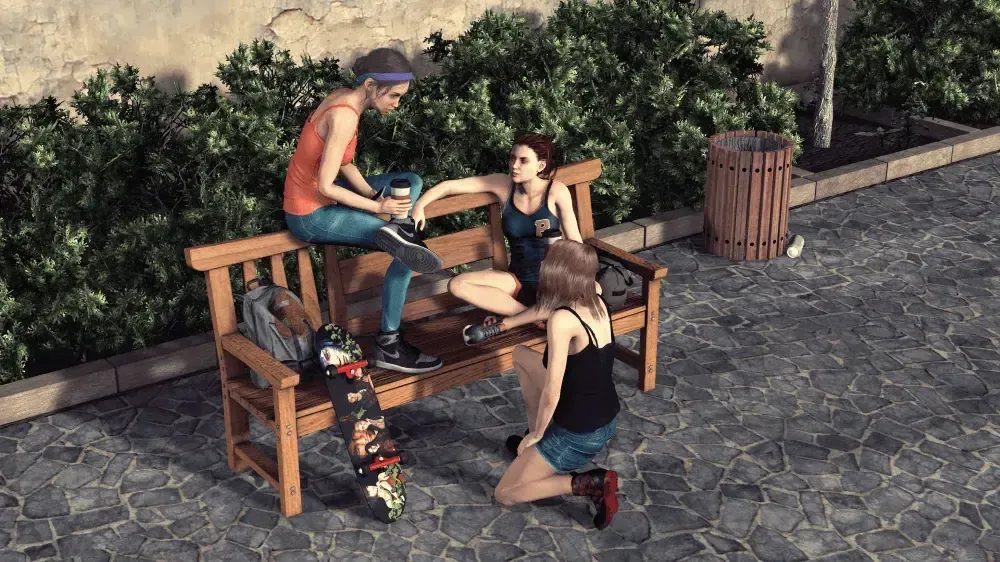
Forget epic 50-hour campaigns. Short Sad Stories understands that some emotions are best delivered in concentrated doses. A single vignette might take anywhere from 10 to 30 minutes to experience, making it perfect for a single, focused sitting ☕. The pacing is deliberately slow, almost meditative. You’ll often be given a small, intimate space to explore—a room, a park bench, a stretch of beach—with no urgent quest marker flashing at you.
The structure typically revolves around a simple, poignant task: “Find five objects that remind you of her,” or “Put the photos back in the album.” These tasks provide a gentle direction, but the real discovery happens in the how and the why. As you click on a forgotten book or hover over a faded photograph, the game often reveals a snippet of memory, a line of thought, or a piece of dialogue. These are your collectibles—not weapons or coins, but fragments of a life and feelings 🧩.
This design profoundly shapes player expectations. You quickly learn that the goal isn’t to finish the checklist quickly. The goal is to linger. To read the inscription inside the book cover. To stare out the virtual window as the rain patters down, mimicking the character’s mood. The pacing forces you to sync with the story’s emotional rhythm, making you an active participant in its melancholy, not just a spectator rushing to the next plot point.
How the game uses interaction to build emotion
This is where Short Sad Stories truly shines as an interactive narrative. Interaction is the engine of its emotional power, but it works in subtle, unconventional ways. In most games, a choice leads to a branching path, a better ending, or a tangible reward. Here, choices and interactions are rarely about altering the destination. The story’s end is often fixed—this is a story about sadness, after all 😔. Instead, interaction is about deepening your understanding and connection to that ending.
You might be asked to place objects in a scene. Dragging a child’s toy to a shelf isn’t about solving a puzzle; it’s about performing the act of letting go, and feeling the weight of that gesture. You might replay memories from different angles, not to find a “correct” version, but to piece together the flawed, human perspective of the character. The interactive narrative is built so that your cursor becomes a tool for empathy, not problem-solving.
Practical Tip: Don’t ask “What choice gives me the good ending?” Ask, “What action feels most true to this moment, or to the character I’m understanding?”
This approach to emotional game design is revolutionary. It validates feelings of powerlessness, regret, and quiet reflection by making them the core verbs of play. By clicking, dragging, and selecting, you are literally handling the emotions of the story, which creates a far more visceral and personal connection than simply watching a cutscene could ever achieve.
My first playthrough: a personal anecdote
I remember my first playthrough reaction vividly. The vignette was called “The Last Message.” I was playing as someone scrolling through a simulated chat app on a phone, looking at the final conversation with a friend who had moved away 🌐. The task was simple: “Delete the chat.”
As I scrolled, I could click on individual messages to hear the character’s internal monologue—the hope in a silly meme sent, the creeping anxiety as replies grew slower, the final, unanswered “Are you okay?” My instinct as a seasoned gamer was to look for a way to “fix” it. Maybe if I clicked the messages in a different order? Maybe if I didn’t delete it? But the game offered no out. The only interactive option was the glowing “Delete” button at the top.
Hovering over that button, I felt a genuine hesitation. My finger was on the mouse. I was about to make this digital artifact of a broken friendship disappear. That tiny, mechanical action—the left click—was loaded with a symbolic weight the game had meticulously built. I finally clicked. The screen faded, not to a “Game Over,” but to a view of the character placing their phone in a drawer and softly closing it. The silence afterward was heavier than any boss fight defeat I’d ever experienced.
“I hover over the delete button. It doesn’t feel like cleaning up. It feels like a burial.”
That small interactive moment shifted my entire appreciation for the title. I realized I wasn’t just being told a sad story; I was being asked to participate in the act of mourning a tiny loss. It was profoundly effective and cemented Short Sad Stories as a masterpiece of empathetic design.
What to Know Before You Play
To get the most from this story-driven indie game, adjusting your mindset is key. Here’s a quick guide to set your expectations:
| If You’re Used To… | In Short Sad Stories, Expect… |
|---|---|
| Clear objectives & rewards | Emotional objectives & reflective payoffs |
| Fast-paced action | Deliberate, thoughtful pacing |
| Branching stories with “best” endings | Focused narratives about emotional truth |
| Gameplay separated from story | Gameplay that **is** the story |
For your best experience:
* Set Your Time: 🕰️ Plan for 20-30 minutes per vignette. Don’t rush.
* Create the Space: 🎧 Play with headphones, in a quiet moment. This game is about atmosphere.
* Engage Freely: There are no “wrong” choices, only different shades of feeling. Interact with everything that draws your eye.
* Accessibility: The game is generally low-pressure with simple point-and-click mechanics, though some themes are emotionally mature. It’s commonly found on major PC digital stores and is often discussed in communities dedicated to indie gaming and narrative design.
Short Sad Stories is a deliberate and brave piece of interactive art. It matters because it proves games can be about the quietest human experiences and use their inherent interactivity to explore those spaces with unmatched intimacy. It’s less a pastime and more a series of shared, empathetic moments—a collection of narrative vignettes that stay with you long after you’ve closed the game.
Short Sad Stories is a compact yet powerful interactive experience that uses simple mechanics and careful pacing to explore themes of loss, memory, and regret. By approaching the game with patience—using the walkthrough tips, reflection prompts, and play journal template provided—you can deepen your emotional understanding and get more from each vignette. If you found these insights helpful, try the suggested play plan, share your reflections with other players, and revisit scenes with different choices to see how meanings shift.