Project SAGE
Play Project SAGE
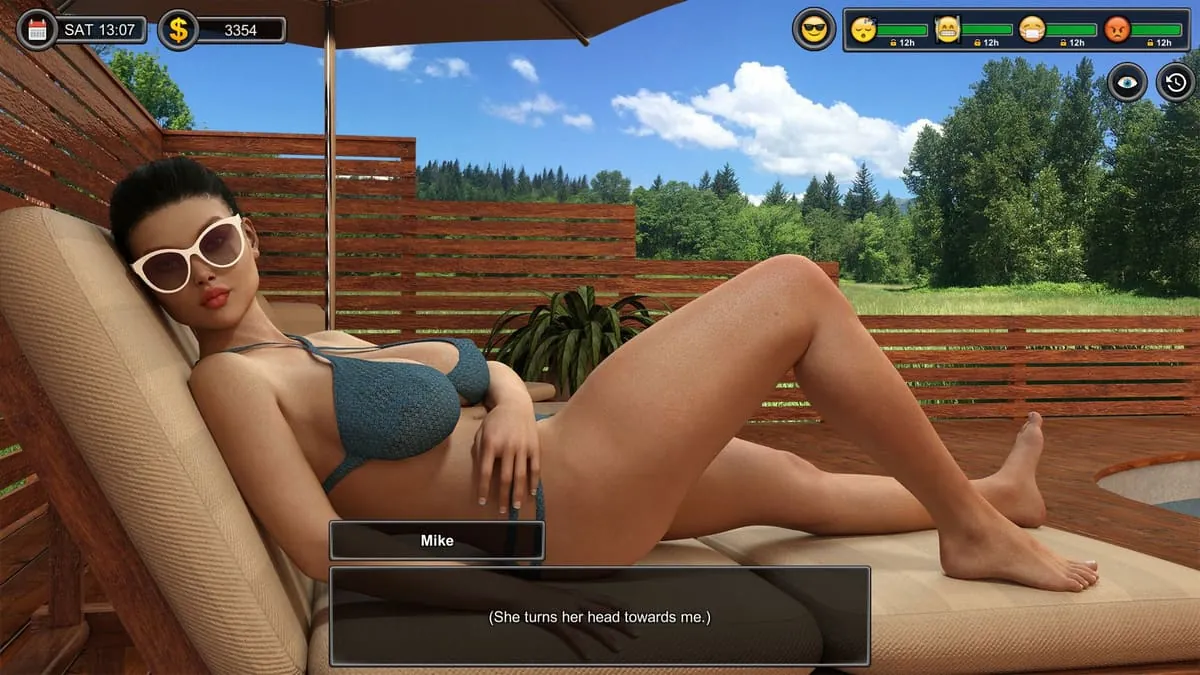
Project SAGE Screenshots







Project SAGE review
Master every decision point and unlock all storylines in this choice-driven interactive experience
Project SAGE stands out in the interactive narrative genre by prioritizing meaningful player choice over linear progression. Unlike traditional games where your decisions merely affect pacing, every choice in Project SAGE fundamentally shapes how your story unfolds. Whether you’re navigating bathroom scenarios, managing relationship dynamics, or responding to unexpected encounters, your decisions create branching paths with lasting consequences. This guide explores the critical decision points, optimal choices for different playstyles, and how your selections unlock hidden content and alternative storylines. Understanding the choice mechanics will help you experience all the game has to offer.
Understanding Project SAGE’s Choice-Driven Mechanics
Ever felt like your choices in a game don’t really matter? 😩 You pick the “nice” option, get a pat on the head, and the story chugs along the same track. Well, forget everything you think you know about interactive stories. Project SAGE isn’t just another game; it’s a living, breathing world where every single whisper of a thought you commit to can reroute your entire destiny. This isn’t about changing the ending—it’s about crafting a completely unique story from the ground up. 🧩
Welcome to the heart of Project SAGE’s genius: its choice-driven gameplay mechanics. Here, your decisions are the architects, the scriptwriters, and the directors. There is no “main path” to occasionally deviate from. Instead, you are constantly laying down the tracks for your own personalized train, and once you’ve chosen a direction, there’s no magical undo button. It’s a thrilling, sometimes terrifying, way to play that makes each playthrough feel uniquely yours.
How Decisions Shape Your Story Progression
In most narrative games, your branching narrative decisions might affect who lives, who dies, or which romance you lock in. In Project SAGE, choices dictate the very fabric of your reality. Think of it less like choosing dialogue and more like selecting your character’s core personality and moral compass in real-time. These choices don’t just open or close doors; they build entirely new rooms you didn’t even know existed.
I learned this the hard way on my first playthrough. I decided to play a charismatic, slightly manipulative protagonist, thinking I could sweet-talk my way into any situation. Early on, I chose to flirt with Simon during a tense moment, seeing it as a harmless way to ease the pressure. Big mistake. 🚨 That single action didn’t just flag a “romance point”; it fundamentally altered how other characters, especially Hank, perceived my loyalty and trustworthiness for the rest of the game. Later story beats, entire conversations, and even mission availability were filtered through the lens of “the person who cozy’s up to Simon.” My story progression path became one of political maneuvering and strained alliances, all because of one flippant choice I made in Chapter 2.
This is the core of the interactive narrative game experience here. The game employs a sophisticated, behind-the-scenes decision tree where early choices cascade into later consequences with startling clarity. Choosing to be aggressive unlocks assertive dialogue options and missions involving force. Playing a compassionate negotiator opens up peaceful resolutions and deeper emotional confidences from characters. You’re not watching a story unfold; you’re coding it with every click.
Pro Tip: Don’t think of saves as checkpoints. Think of them as timelines. Before a major story beat, save your game and give that new file a name like “Timeline_Charming_Simon” or “Timeline_Honest_Hank.” It makes returning to experiment with Project SAGE choices much more intuitive and fun!
The beauty is in the commitment. There’s a palpable weight to your choices because you know the game won’t hand you a convenient “golden ending” if you collect enough points. You live with your decisions, and that makes every moment of connection, conflict, and consequence profoundly more engaging.
To visualize how these ripples turn into waves, let’s look at some critical junctions. The table below outlines a few major branching narrative decisions and how they can steer your story progression paths in wildly different directions.
| Major Decision Point | Your Available Options | Potential Long-Term Consequences & Paths Unlocked |
|---|---|---|
| Initial Approach to the Sage Conflict | Support Simon’s Tech-First Plan / Back Hank’s Direct Action Plan / Propose Your Own Cautious Middle Ground | Simon Path: Unlocks tech-centric missions, deeper insight into corporate espionage. Hank Path: Opens combat/stealth scenarios, builds paramilitary trust. Independent Path: A harder, diplomacy-focused route with unique alliances. |
| Handling the “Matt” Situation at the Gallery | Confront Him Publicly / Blackmail Him Quietly / Forge an Alliance / Ignore Him Entirely | Confronting may gain public favor but make a powerful enemy. Blackmail unlocks a secret “spy scenario” with Matt for exclusive content. An alliance can lead to a lucrative, morally grey partnership. Ignoring him closes his **character-specific storyline** entirely. |
| Managing Your Relationship with “Uncle” | Be the Dutiful Nephew / Question His Motives / Spy on Him for Another Faction | Dutiful path unlocks family secrets and unique support resources. Questioning leads to tense, reveal-driven conversations. Choosing to spy on him is a high-risk, high-reward play that opens the most extensive and secretive **spy scenario**, revealing hidden agendas and unlocking a major alternative ending branch. |
| Personal Philosophy During the Ethics Debate | Advocate for Utilitarian Outcomes / Argue for Deontological Rules / Embrace a Chaotic, Self-Serving Approach | This seemingly philosophical choice actually locks in your protagonist’s “voice.” It filters future dialogue options, determining which **character-specific storylines** resonate with you (e.g., romantic partners will react to your stated ethics) and can even change how NPCs initiate conversations with you later. |
Key Decision Points and Their Long-Term Impact
As the table hints, Project SAGE is masterful at planting seeds that bloom chapters later. Let’s dig deeper into two of the most defining branching narrative decisions: your romantic alignment and your approach to secretive allies.
The Romantic Crossroads: Simon vs. Hank 💘
This is more than just picking a love interest; it’s choosing a worldview. Pursuing Simon often aligns you with innovation, corporate strategy, and a more cerebral, if cold, approach to problems. His character-specific storyline involves navigating boardroom politics and digital frontiers. Choosing Hank, however, ties your fate to grassroots action, physical conflict, and raw loyalty. His path is grittier, focused on field operations and personal sacrifice.
But here’s the twist: the game acknowledges shades of grey. You can attempt a sexually exploitative path with certain characters—using charm or leverage for short-term gain without emotional investment. This will net you different scenes and immediate rewards but often burns bridges permanently, locking you out of deeper, more romantic narratives. The game doesn’t judge you for this; it simply calculates the consequences, making your social landscape barren but perhaps strategically simpler. It’s a valid, if lonely, story progression path.
Unlocking the Secret Agents: Matt & Uncle 🕵️♂️
Some of the richest content is hidden behind specific spy scenarios. Characters like Matt and Uncle aren’t just side NPCs; they are vaults of hidden narrative.
- Matt: To access his extra content, you generally need to choose options that show you’re willing to play a deceptive game. The blackmail or alliance routes from the table are prime examples. Succeed, and he becomes a source of underground missions, alternative information, and a uniquely amoral companion storyline.
- Uncle: He is the pinnacle of unlocking hidden content. To see his true role, you must actively choose to betray his trust—the “spy on him” option. This path is fraught with danger and double-crosses but rewards you with the most jaw-dropping revelations in the game, fundamentally explaining backstory events and offering a narrative power move few players ever see.
A quick note on Chris: As of the current version, Chris’s role is more static, and he lacks the extensive additional character-specific storylines that others have. This may be a point of expansion in future updates, but for now, focus your exploratory energy on the characters who clearly have hidden depths to plumb!
The lesson? In Project SAGE, trust is a currency, and how you spend it determines which secret doors swing open.
Unlocking Hidden Content Through Strategic Choices
So, you want to see everything Project SAGE has to offer? 🏆 Unlocking hidden content here is an art form. It requires forethought, multiple playthroughs, and a willingness to make choices that feel completely opposite to your natural instincts.
1. Embrace Radical Replays. Your first playthrough should be for your heart. Follow your gut. But your second? Go in with a plan. Decide from the start: “This is my ‘Ruthless Corporate Spy’ timeline” or “This is my ‘Honorable Freedom Fighter’ timeline.” Commit fully to that persona from the very first decision. You’ll be amazed at how different the opening chapters feel when your motivations are clear.
2. Save Strategically, Not Just Frequently. Don’t just hammer the quicksave button. Use manual saves as bookmarks for major branching narrative decisions. Before any meeting with a key figure like Uncle or Matt, save. Before a major philosophical debate, save. Label these saves descriptively. This creates a map of your decision tree, allowing you to jump back to specific forks without replaying 10 hours of content.
3. Pursue One Major Arc Per Playthrough. The game’s choice-driven gameplay mechanics are designed to make hybrid paths challenging. To reliably access the deepest secrets of, say, Hank’s storyline or Uncle’s spy scenario, you need to align your choices consistently. If you flip-flop, you might end up in a narrative no-man’s-land, missing the critical mass of choices needed to trigger the really good hidden scenes. Be singular in your focus for each run.
4. Talk to Everyone, Every Time. And I mean everyone. After every major plot event, make the rounds. Characters like Matt or Simon will have new, often fleeting dialogue options that only appear if you’ve made certain prior choices. These conversations are the primary delivery method for unlocking hidden content. A throwaway line in Chapter 3 might be the key to a special mission in Chapter 7.
5. Don’t Fear the “Bad” Choice. Some of the most fascinating narrative content is locked behind what a traditional game would call the “bad” or “mean” options. Project SAGE doesn’t deal in simple morality; it deals in cause and effect. Choosing to betray, manipulate, or exploit opens up story progression paths that are just as complex and engaging as the heroic ones, often revealing darker aspects of the game’s world and characters.
Ultimately, mastering Project SAGE is about understanding that you are the author. Its choice-driven gameplay mechanics are your toolkit. The branching narrative decisions are your plot twists. By thoughtfully engaging with each decision point, you move beyond simply playing a game and begin curating your own collection of intertwined tales, each with its own secrets waiting to be discovered. Now go build your saga. Your next Project SAGE choices are waiting.
Project SAGE’s strength lies in its commitment to meaningful choice-driven storytelling where every decision genuinely matters. By understanding the decision tree, recognizing how early choices impact later content, and knowing which options unlock character-specific storylines, you can craft a personalized experience that aligns with your preferred narrative path. Whether you’re pursuing romantic relationships, exploring alternative storylines, or unlocking hidden content with specific characters, your choices remain the driving force of your journey. Experiment with different decision combinations to discover all the narrative variations this interactive experience offers.